
Inside Google’s Gen Z Research: How Bixa Helped Redesign the Future of Ads

Understanding a generation isn’t just about collecting data points. It’s about seeing patterns in how people move through the world.
Gen Z doesn’t follow tidy funnels or predictable paths online. They move fluidly between platforms, ideas, and moments of discovery—scrolling, searching, saving, comparing, and sharing along the way. What looks like randomness on the surface is actually a deeply personal process of exploration.
For Google Ads, reaching this generation meant looking beyond clicks and impressions to understand the human behavior shaping them.
Together, Google and Bixa set out to explore how Gen Z interacts with digital advertising across shopping, travel, jobs, education, and more. Through global qualitative research conducted in the United States, India, and Brazil, we uncovered the motivations, expectations, and moments that influence how younger audiences engage with ads.
The result wasn’t just insight—it was a new way of designing ad experiences that feel relevant, personalized, and built for the way Gen Z actually navigates the digital world.
Understanding How Gen Z Interacts with Digital Ads
Gen Z doesn’t interact with advertising the way previous generations did.
They scroll quickly.
They jump between platforms.
They expect technology to adapt to them—not the other way around.
For Google Ads, understanding this generation isn’t just interesting—it’s critical.
That’s why Google partnered with Bixa Research—to uncover how Gen Z discovers products, plans travel, explores jobs, and evaluates opportunities online, and how advertising can support those journeys instead of interrupting them.
Bixa Research is a Washington DC–based market research firm specializing in qualitative research, UX testing, and customer journey analysis for global brands including Google.
The research focused on five major ad verticals:
shopping ads
travel ads
local/maps ads
job ads
education ads
Bixa conducted global research with Gen Z across:
United States
India
Brazil
Bixa uncovered behavioral patterns that helped Google teams improve ad formats, optimize engagement, and design future advertising experiences that align with Gen Z expectations.
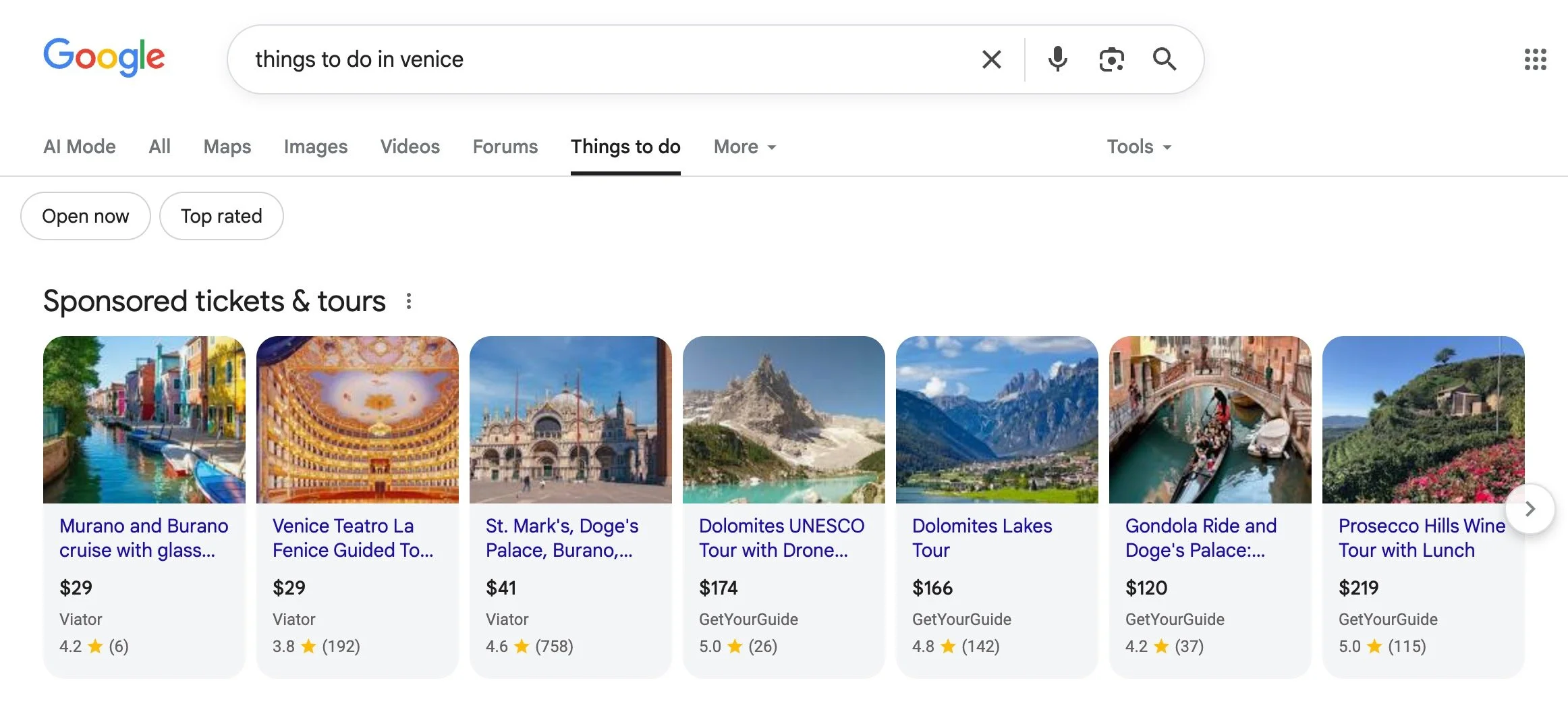
Every time you look at an ad on Google today, you’ll know that Bixa’s research impacted the format, display, what elements show up font and center, and interactive approaches.
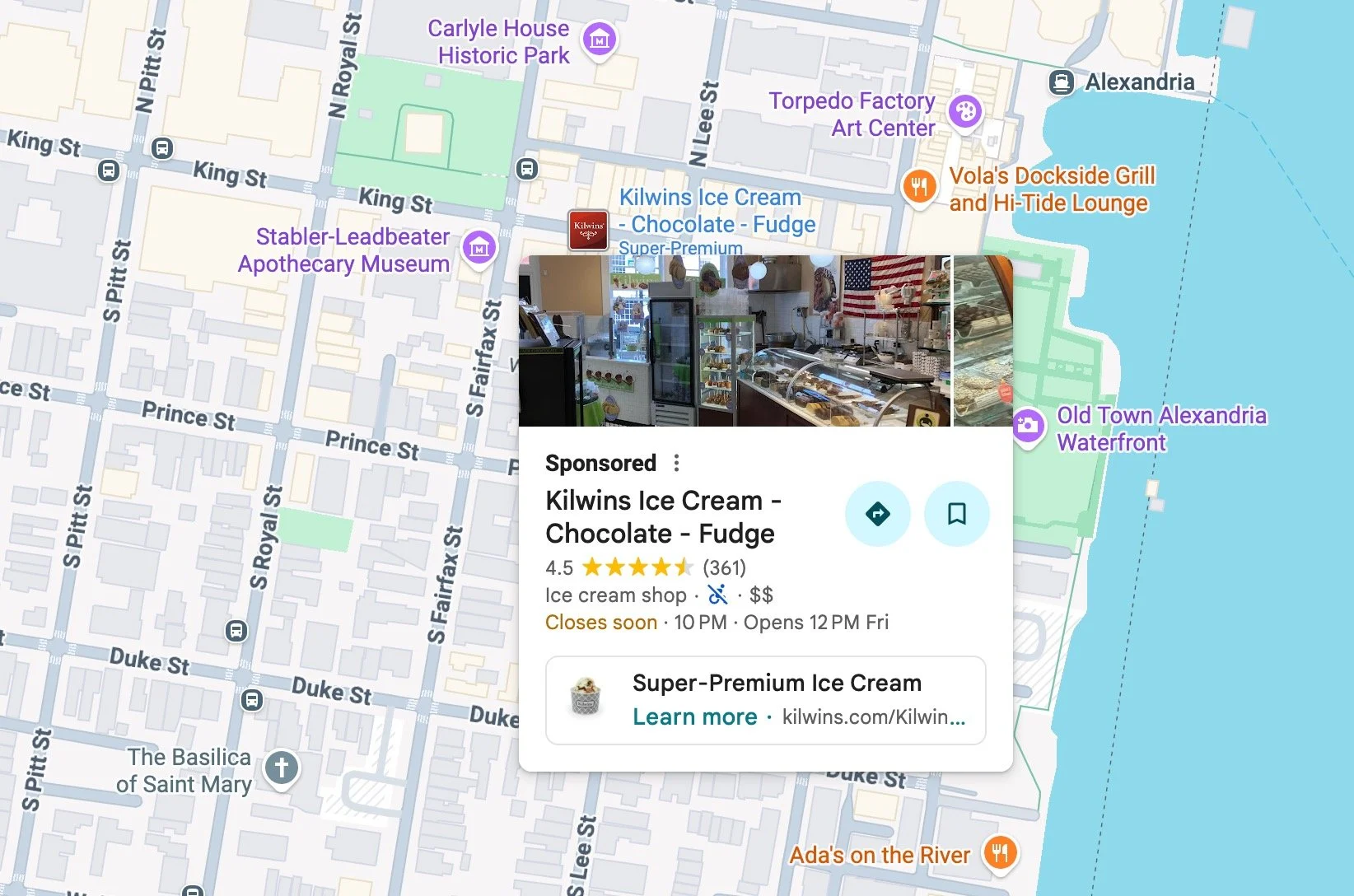
Google’s research questions
Google’s Ads teams were exploring several major questions:
How does Gen Z discover products, travel experiences, jobs, and educational opportunities online?
When do digital ads feel helpful versus intrusive?
What signals make an ad feel trustworthy and relevant?
How does personalization affect engagement?
Where do ads fit within Gen Z’s nonlinear decision-making journeys?
These weren’t questions that could be answered through metrics alone. They required deep behavioral insight into how real people interact with digital experiences.
Bixa’s Research Approach
To uncover meaningful patterns, Bixa designed a multi-method qualitative research program combining exploratory interviews, UX testing, and real-world behavior tracking.
Global Qualitative Research
Participants were recruited in three major markets:
United States
India
Brazil
This international approach allowed the team to identify both universal Gen Z behaviors and important cultural differences in how ads are perceived and used.
(Link: Qualitative Market Research)
In-Depth Interviews
Moderated interviews explored how Gen Z thinks about personalization, digital discovery, and advertising.
Participants discussed their expectations for technology and described when ads felt useful versus irrelevant.
(Link: In-Depth Interview Research)
UX Testing of Ad Experiences
Participants interacted with ad formats, search results, and prototypes while thinking aloud.
This allowed the team to observe how Gen Z interprets ad placement, messaging, and personalization signals in real time.
(Link: UX Research and Usability Testing)
Video Diary Studies
Participants documented their digital behavior over time—capturing how they actually discover destinations, jobs, products, and services in their everyday lives.
These video diaries revealed patterns that traditional research often misses.
(Link: Video Diary Research)
Mapping Gen Z’s “Pinball” Journey
One of the most important discoveries was that Gen Z rarely follows a linear path to conversion.
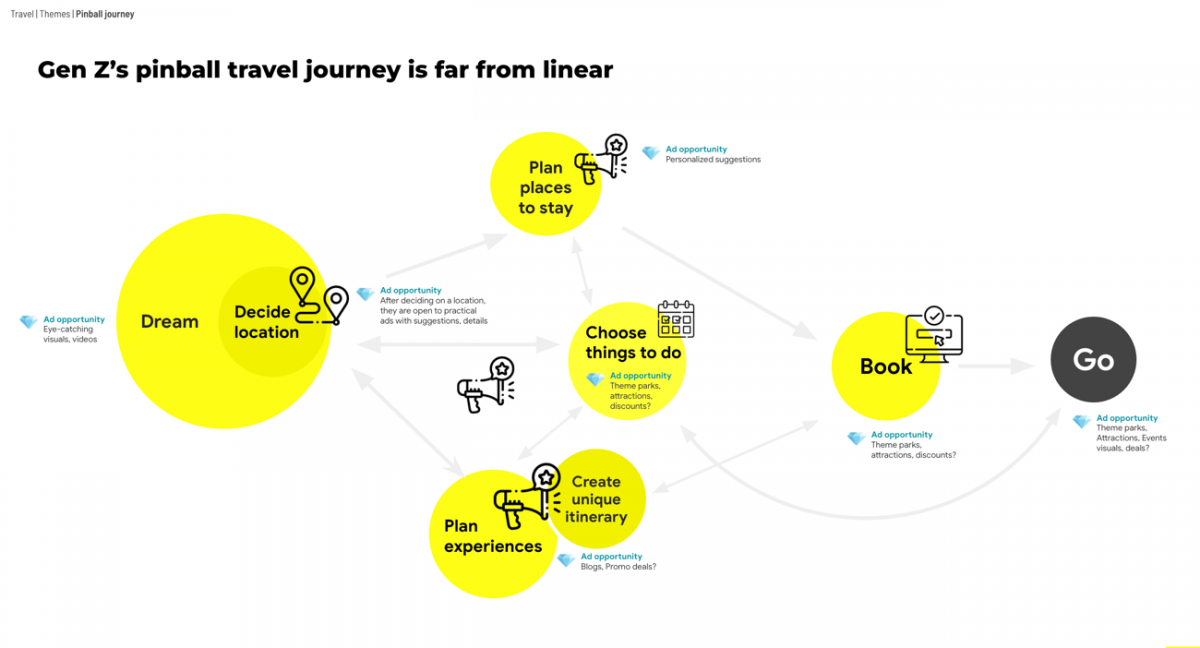
Instead of moving neatly from awareness to purchase, Gen Z’s behavior looks more like a pinball machine.
They bounce between:
social media
search
recommendations from friends
review platforms
blogs and video content
digital ads
Each touchpoint influences the next.

To help Google visualize this complexity, Bixa developed detailed customer journey maps identifying where advertising could provide meaningful support during discovery and decision-making.
(Link: Customer Journey Research)
These maps helped Google teams identify moments when advertising could add value—rather than disrupt the experience.
A Core Insight: Gen Z Wants Control
Across markets, one theme appeared consistently.
Gen Z wants to shape their own digital experiences.
They expect personalization—but they also want control.
Features that increased engagement included:
recommendations tied to search behavior
customization options
tools that help users build itineraries or compare options
experiences that support individuality and self-expression
Ads felt helpful when they expanded possibilities, rather than pushing a specific outcome.
Translating Behavioral Insights into Product Strategy
Bixa translated these insights into practical frameworks that Google teams could use to design future ad experiences.
Deliverables included:
Gen Z design principles for advertising experiences
journey maps identifying high-impact ad placement opportunities
UX recommendations for improving ad formats
wireframes demonstrating new interaction models
These frameworks helped Google Ads teams connect behavioral insight with product design decisions.
Results & Impact
The research delivered both immediate and long-term impact across Google’s advertising teams.
Boosted Gen Z Ad Engagement Across Global Markets
By identifying behavioral patterns across the U.S., India, and Brazil, Bixa helped Google refine ad experiences to better align with Gen Z expectations—improving engagement across multiple ad categories.
Increased Conversions Through Journey-Driven Design
Using customer journey mapping, UX testing, and video diary research, Bixa uncovered friction points in Gen Z’s nonlinear path to conversion.
Optimizing ad formats based on these insights improved relevance, usability, and conversion potential across billions of ad interactions.
Built a Scalable Framework for Product Innovation
Bixa translated qualitative insights into design principles and UI recommendations that now help Google teams build consistent, user-centered advertising experiences aligned with Gen Z digital behavior.
What the Google Team Said
“Bixa felt like an extension of our team. They were responsive, collaborative, and fully invested in helping us understand Gen Z behaviors across our global markets.”
“Bixa’s moderators were clearly very experienced. They probed deeply in qualitative research, asking smart follow-up questions that gave us real clarity on how younger users interact with different ad formats.”
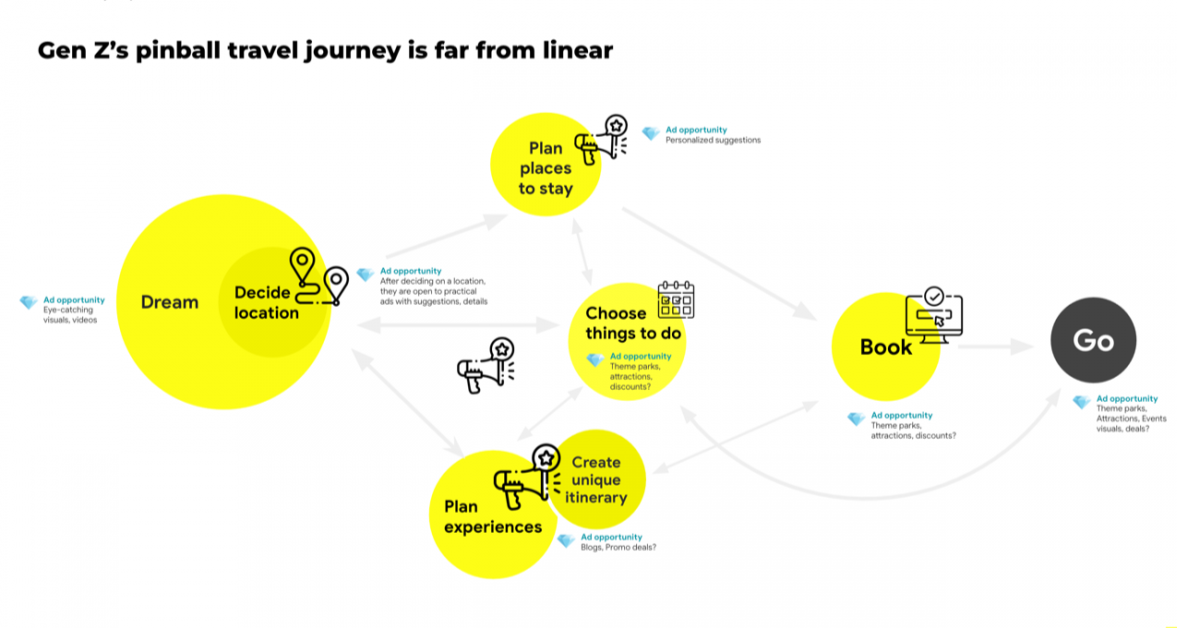
“Bixa was able to unpack and visually represent a very complex, non-linear journey map that our team had been struggling with for a long time.”
“Bixa’s insights were sharp, actionable, and easy to understand. We're excited to work with the team again.”
Related Research Services
Bixa helps organizations translate human insight into better product and marketing decisions. Explore related research services:
Qualitative Market Research
UX Research & Usability Testing
Customer Journey Mapping
Video Diary Studies
Gen Z Consumer Research
Related Case Studies
About Bixa Research
Bixa Research is a Washington DC–based market research firm headquartered in Alexandria, Virginia.
We specialize in helping organizations understand how people think, behave, and make decisions through research methods including:
qualitative research
UX research and usability testing
customer journey mapping
persona development and segmentation
global consumer research
Our team partners with leading brands to translate human insights into better products, stronger marketing, and smarter business decisions.